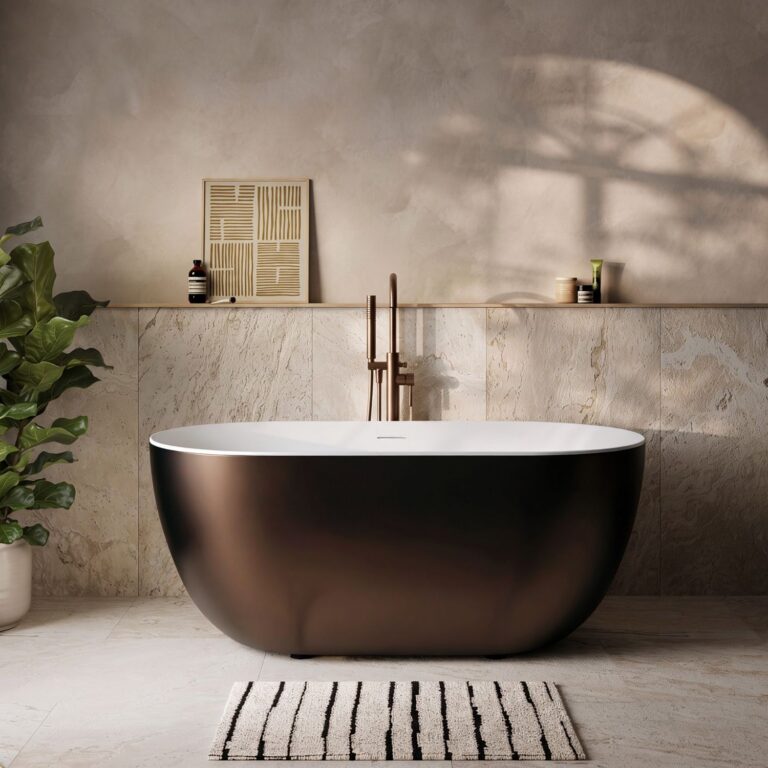
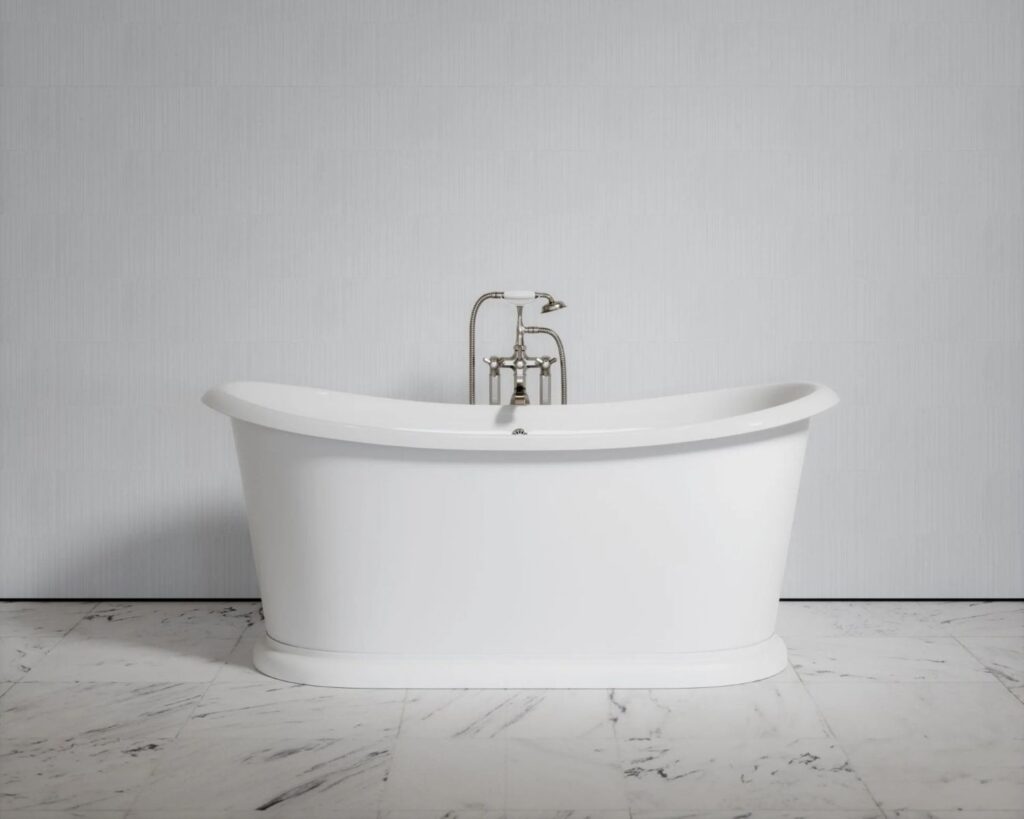
Frontline Bathrooms has launched 16 new metallic finishes to its painting services across its AquaKast freestanding bath collection. The move offers greater choice for bathroom retailers as they willnot need to stock or display additional bath models to offer customers bespoke options across existing collections.
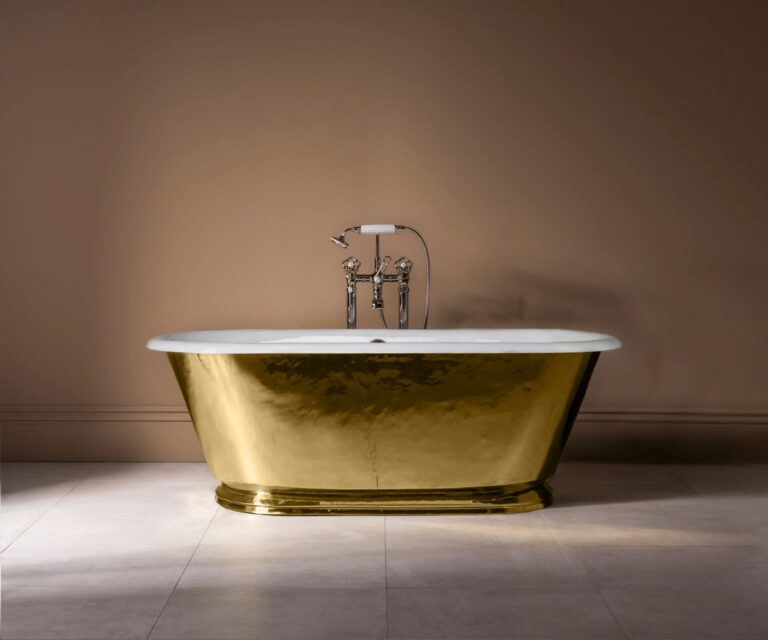
Finishes include the rich warmth of Blackened Bronze, Copper and Antique Gold, as well as softer, more understated options including Champagne, Platinum, Old Silver and Silver Blush.
The launch comes as personalisation continues to influence bathroom design, with customers increasingly looking beyond standard colours and finishes to create spaces that feel individual to them. While metallics have long been a feature of brassware and accessories, Frontline is now extending that choice to the bath itself, creating new opportunities for retailers to add value to the sale while giving designers greater freedom to bring an entire bathroom scheme together.
Darren Allison, managing director at Frontline Bathrooms, explains: “Personalisation has become a much bigger part of the bathroom conversation, but there’s a practical challenge for retailers. Customers want more choice, more colours and more ways to make their bathroom their own, yet showroom space is limited and nobody can realistically display every possible variation of a product.
“That’s why we see this as such an exciting development for our AquaKast collection. We are not asking retailers to take on another 16 baths. We are giving them 16 additional ways to sell the baths they already know, while offering something that feels genuinely different to the customer.
“Metallic baths have traditionally been associated with the very top end of the market, but there’s no reason why that level of individuality should be restricted to a small number of specialist suppliers.”
Available across the AquaKast freestanding collection, the new metallic painting service uses specialist surface preparation techniques and high-performance coatings to achieve a smooth, durable finish. Each bath is finished to order, with the service operating through Frontline’s existing special-order process. The current lead-time is 14 days.
Retailers can also purchase a dedicated handmade metallic colour chart from the paint supplier, providing a physical reference to help customers explore the full choice of finishes.
Roca Group has opened a new gallery in Croatia. The Laufen Roca Zagreb Gallery is designed to help architects, interior designers and specifiersdiscover materials, explore new solutions for the bathroom and engage with the professional community.
Part of the Group’s international network of Galleries, the opening strengthens a long-standing relationship with the region and nearby Zaprešić, where Laufen and Roca’s industrial presence has elevated the standing of both brands across the country and the wider Adriatic region.
In Zagreb, this regional manufacturing heritage meets the international design vision of both brands, in a city shaped by the interplay of Central European tradition and Mediterranean influence.
“Zagreb has a vibrant architecture and design community, and the Laufen Roca Zagreb Gallery is our commitment to it. Bringing our two brands together in one space, we offer architects and designers a single point of reference for bathroom design, backed by our long-standing presence in Croatia”, says Martina Maricic Meic, operations director at Roca Croatia.
A historic building reinterpreted by Snøhetta
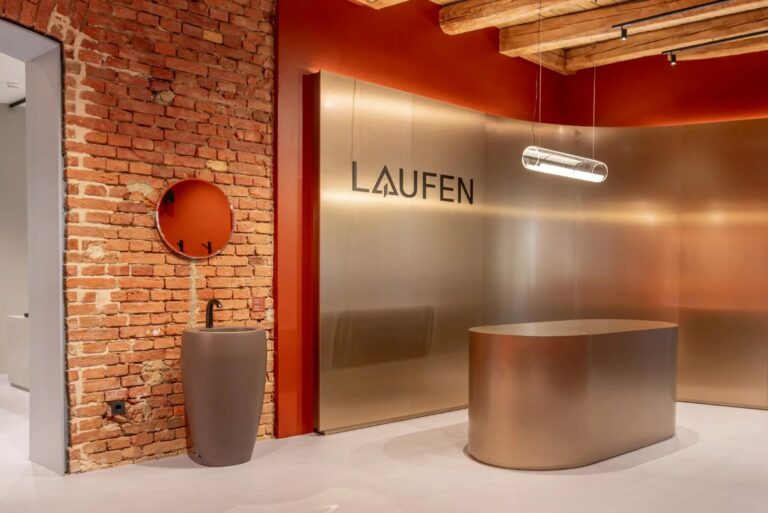
Located in a protected heritage building dating from 1894 in Zagreb’s Lower Town, the Gallery has been redesigned by Snøhetta around its Matter concept, developed with LAUFEN. Bringing LAUFEN and Roca together, the design combines ceramics, earthy finishes and fittings with exposed brick and restored timber beams.
A curved copper wall welcomes visitors into the Greeting Space. At the same time, the upper floors exhibit washbasins, toilets, furniture, taps, bathtubs, accessories and shower trays in curated displays and more informal settings.
A space for design and dialogue
The Gallery provides a meeting place for designers, architects and specifiers to explore materials, compare finishes and develop projects. The dedicated Matter Space hosts presentations, talks and professional events, supported by digital areas showcasing both brands.
The Gallery joins Roca Group’s international network of design spaces, connecting architecture and design communities while reflecting the character of each location.
Following the Chancellor of the Exchequer’s Autumn Budget Statement yesterday, Damian Walters, CEO of the British Institute of the Fitted Interiors Specialists (BIFIS), warned that ongoing business cost pressures, tightening margins and the rising cost of living could hamper growth across the fitted interiors sector.
The Budget delivered a mixed outlook for manufacturers, independent retailers and sole-trader installers, with concerns remaining over the costs of running a business.
“Yesterday’s Budget presents a mixed bag for the fitted interiors industry.” He commented. “We recognise the Chancellor’s efforts to offer stability and ease immediate overheads on our high streets through business rate relief, while keeping capital investment incentives in play for British manufacturing.
“However, the reality on the ground is that our sector is an interconnected ecosystem. A showroom cannot deliver without reliable UK manufacturing, and neither can trade successfully without skilled, accredited installers to bring projects across the finish line.
“While fuel duty freezes and capital allowances help with the margins, this Budget falls short of addressing the systemic skills bottleneck and administrative weight carried by our self-employed installation community. Without targeted support to recruit, upskill, and retain technical talent, or meaningful incentives for homeowners investing in energy-efficient domestic upgrades, independent KBB businesses will once again have to rely on their own resilience rather than direct fiscal momentum.
“I am also concerned about the effective tax rise created by fiscal drag. When income tax thresholds remain frozen whilst earnings rise, people can pay a greater share of their income in tax, even when those increases merely keep pace with inflation. Unchanged headline tax rates do not mean an unchanged tax burden. My concern is that this leaves households with less spending power for major purchases such as kitchens, bathrooms and bedrooms, whilst self-employed installers whose taxable profits rise can also face a higher effective tax burden. For a sector already operating on tight margins, the risk is a further squeeze on both customer demand and livelihoods.
“BIFIS will continue working closely with policymakers, industry partners, and our members to ensure professional installation standards and vocational trades remain central to the UK’s broader built-environment agenda.”
Key sector takeaways: How the Budget impacts fitted interiors:
Retail Showrooms & Independent Design Studios: Measures addressing business rate structures offer targeted breathing room for high street design studios navigating cautious consumer spending on major home improvements. However, the broader squeeze on household discretionary income means showroom footfall and conversion cycles will remain fiercely competitive heading into 2027.
UK cabinet, worktop & component manufacturers: The confirmation of plant and machinery capital investment incentives and support addressing high industrial energy tariffs provides tangible relief for UK-based production lines. Despite this, tight margins, high raw material logistics, and corporation tax obligations continue to restrict domestic manufacturers’ capital reserves for extensive workforce expansion.
Self-employed fitters & sub-contract installers: Installers, who make up the backbone of project delivery, face continued day-to-day margin strain. Extended freezes on vehicle fuel duties provide welcome day-to-day transport relief for mobile trades, but the absence of structural interventions on vocational upskilling pathways and rising compliance overheads leaves self-employed tradespeople bearing disproportionate operational pressure. Some good news regarding parental leave/pay for the self-employed is also welcomed by BIFIS.
Features by Diane Larner, founder and editor of Bathroom Review & Kitchens Review. Diane Larner launched both titles over 17 years ago and has been writing about the bathroom and kitchen interior design industries ever since, publishing regular features across both sectors.
Luxury bathroom design is more than just aesthetics; it brings together quality materials, thoughtful detailing, and practical elements to create spaces that feel elegant and timeless. From period influences to bold architectural statements, the latestproducts combine character with sophistication, creating bathrooms that deliver comfort and well-being.
Redefine with bold design and vibrant colour
TRONE – West One Bathrooms
A shift to more individualised bathroom schemes means we are seeing greater emphasis on materiality, finish and form. Rather than relying on the traditional hallmarks of luxury, designers are exploring sculptural silhouettes, tactile finishes, and vibrant colour to create spaces that deliver depth and character. Craftsmanship is central to this approach, with distinctive details and finishes giving each element a clear sense of identity.
Louise Ashdown, head of design at West One Bathrooms, explains: “Luxury ceramics are moving away from the bright, glossy white that defined bathrooms for so long. We’re seeing more demand for matt and satin glazes, soft colour in basins and even WCs, and handcrafted surfaces with natural variation, like zellige or textured field tiles. Clients want pieces that feel tactile and considered, almost like objects in their own right. Sculptural forms, rounded edges and warmer tones play into that, creating spaces that feel calm and personal rather than clinical.”
Founded with a mission to rethink 250 years of bathroom design conventions, Trone transforms everyday bathroom essentials into sculptural design statements. Combining bold geometry, fluid forms and considered engineering, its collections offer an alternative to conventional bathroom fittings, with pieces designed to bring individuality and character to contemporary interiors.
Classic styles that suit every interior
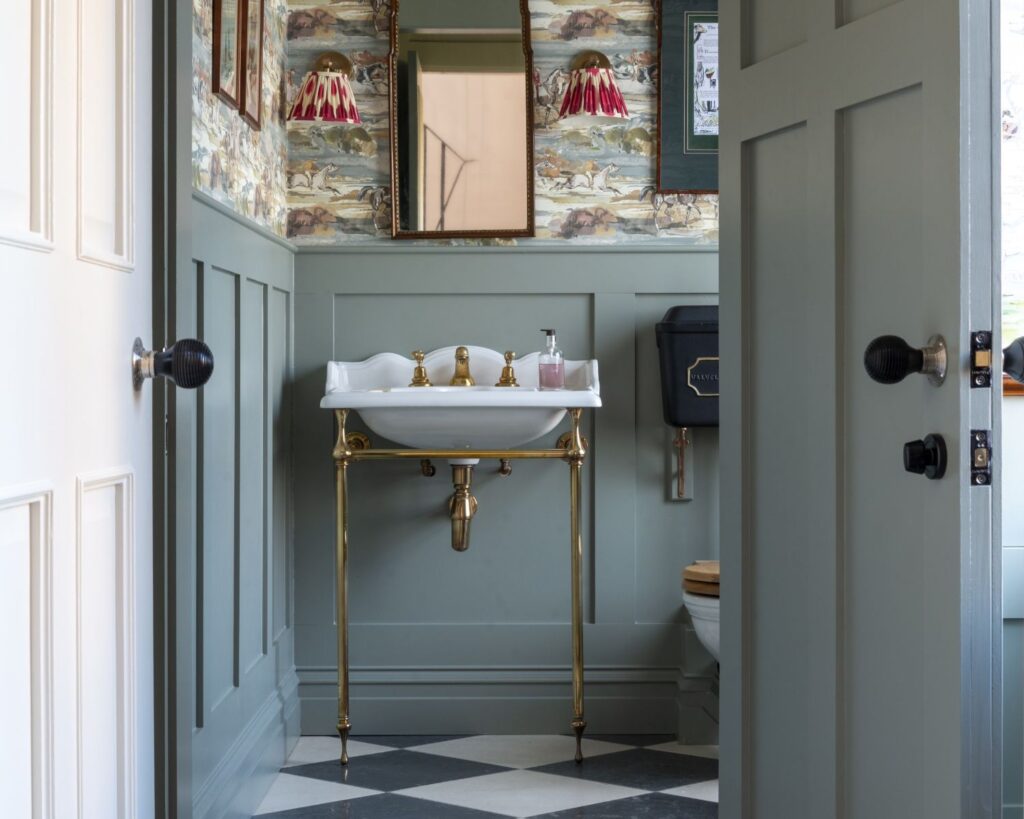
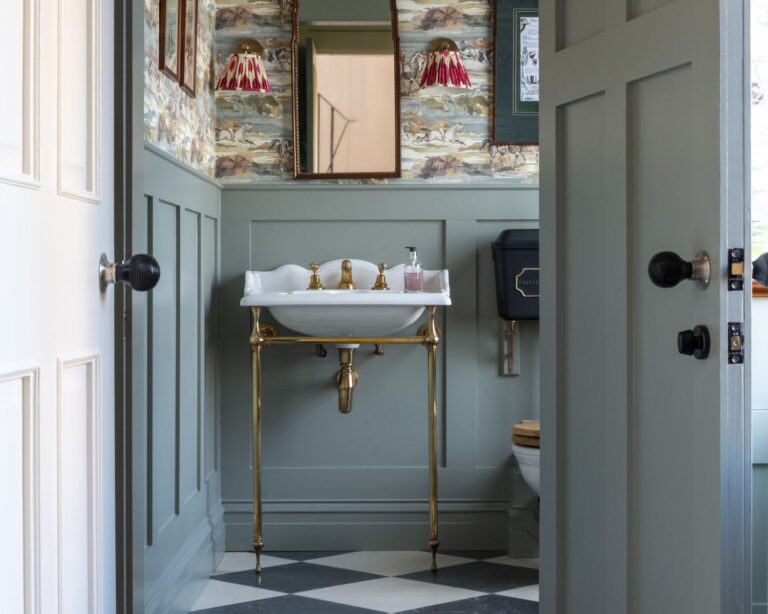
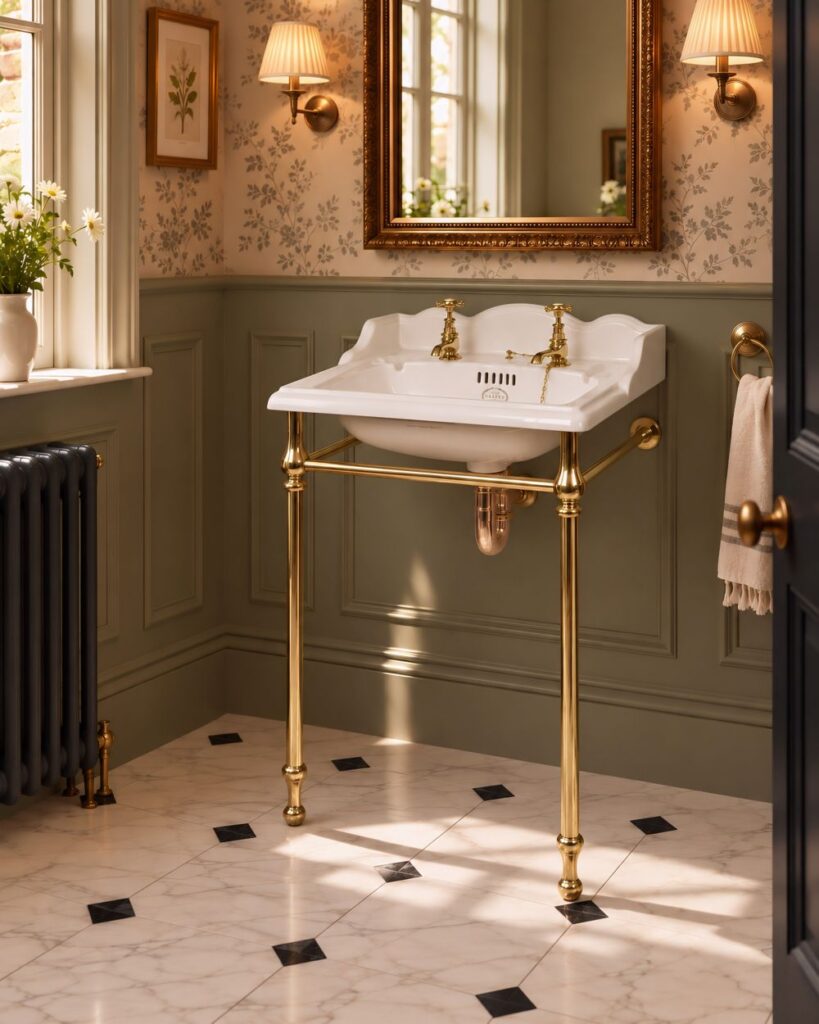
The Marlborough Basin – Thomas Crapper
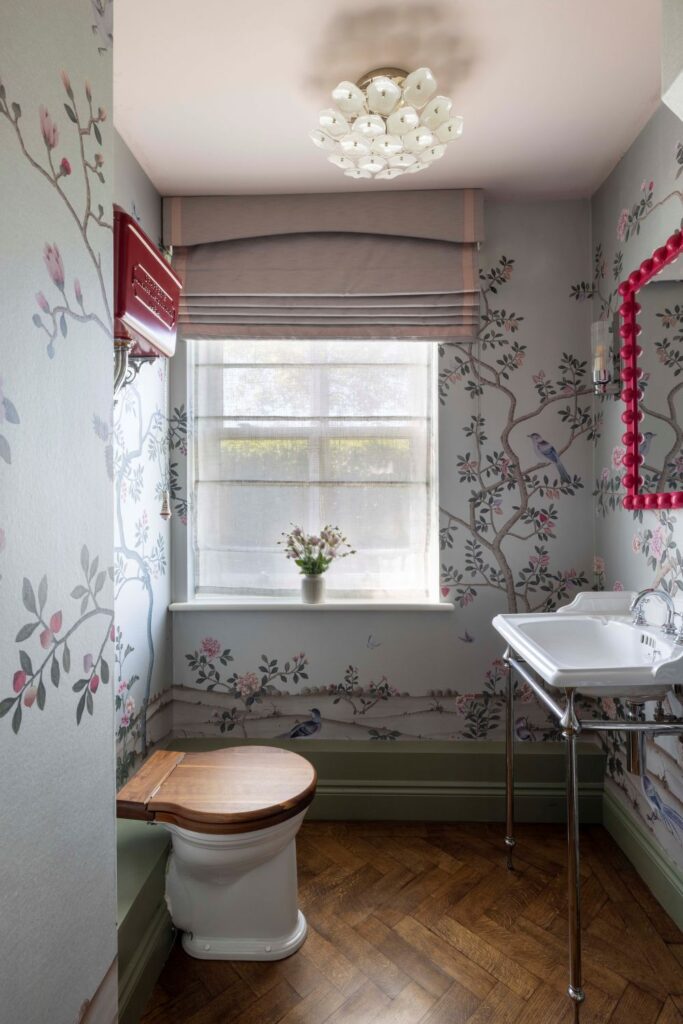
Thomas Crapper’s heritage good looks demonstrate how traditional design can transcend period interiors; when classic fixtures are added to contemporary scenes, they bring character and depth to the design. As personalisation becomes increasingly important in luxury bathrooms, this enduring aesthetic offers a versatile foundation when creating spaces that feel both timeless and distinctive.
Paul Dwyer, managing director, Thomas Crapper & Co, comments, “One of the things I find particularly interesting is how well classic bathroom fittings work across different styles of interior. A beautifully made basin can sit against richly patterned wallpaper, decorative tiles or simple painted panelling, and feel completely at home in each setting. That versatility is important because it gives designers the freedom to create something genuinely personal.”
One example is the Marlborough Basin (pictured above); it can be paired with Thomas Crapper’s decorative washstand, available in chrome, nickel, polished or brushed brass, which introduces an additional architectural detail while providing a practical supporting structure. At 560mm wide, the basin is equally suited to generously proportioned bathrooms and smaller cloakrooms, and either traditional or contemporary settings.
Luxury brassware is a key aspect of architectural expression for high-end bathrooms. Well-chosen design details help create form and finish for the wider scheme, either by building contrast or complementing the surrounding composition. From sculpted contours to precisely engineered finishes, carefully selected taps and fittings can help make a statement without overwhelming the space.
James Lentaigne, creative director at Drummonds, agrees, “Some of the most interesting developments in bathroom design come from revisiting familiar forms with a fresh perspective. Traditional craftsmanship and contemporary design aren’t mutually exclusive; it’s often the combination of the two that creates something distinctive. There’s a growing appreciation for designs that draw on heritage while feeling entirely relevant to modern interiors.”
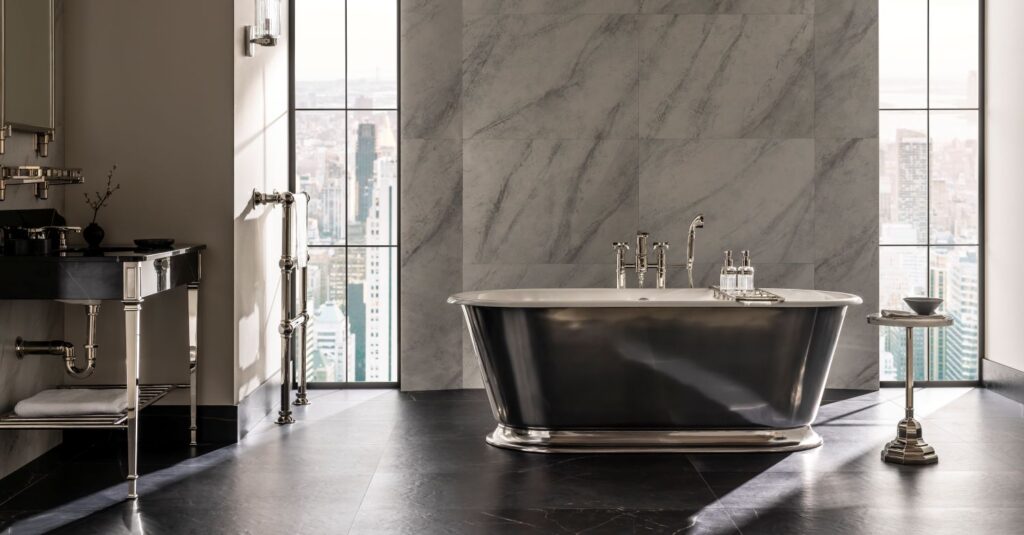
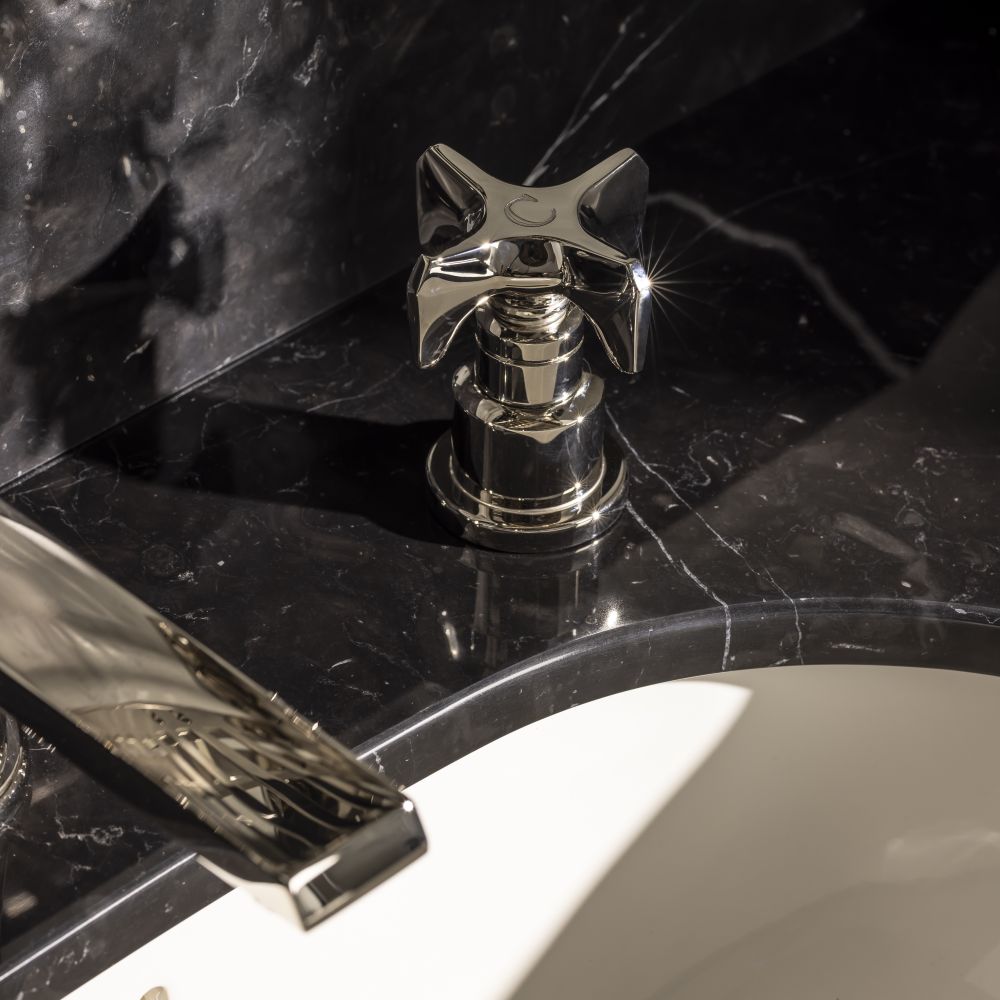
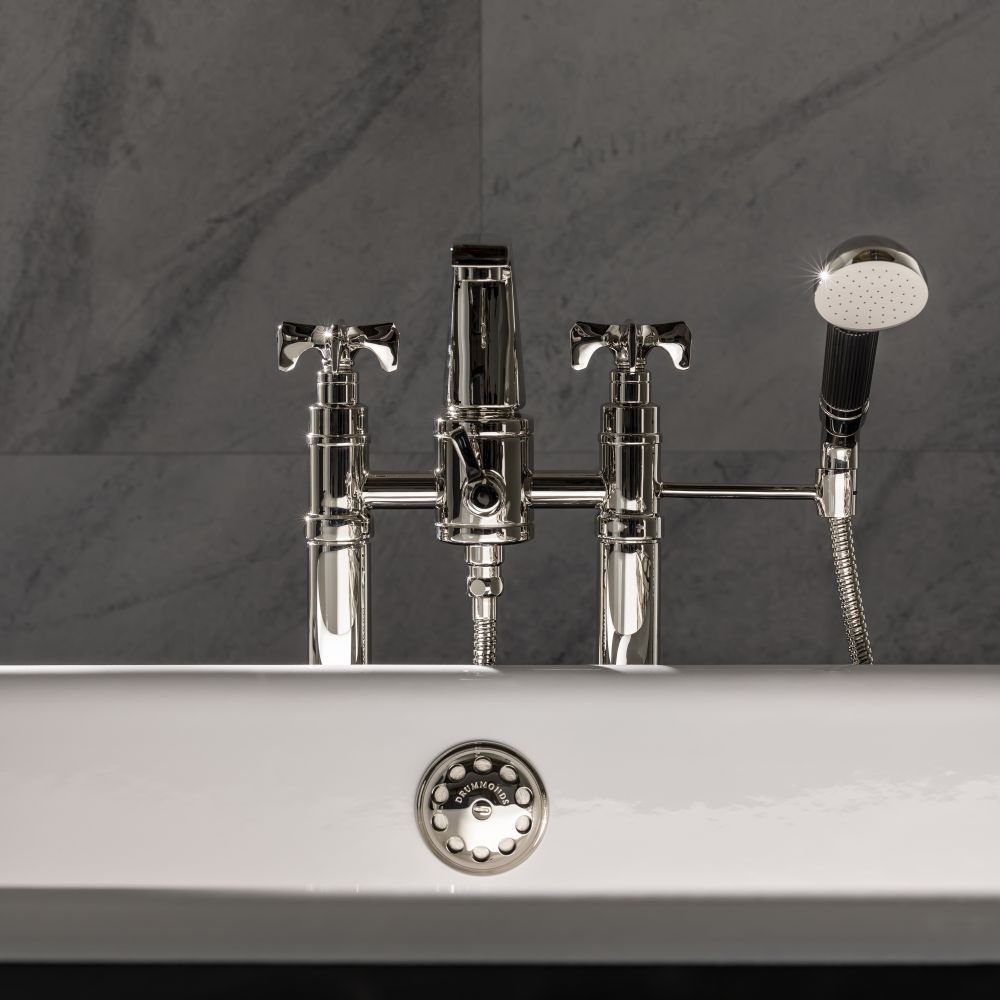
Drummonds Hudson Collection ticks all the boxes. The new brassware range was developed in collaboration with New York-based design studio Pembrooke & Ives and brings together British manufacturing heritage and a contemporary American design sensibility, with a focus on proportion, materiality and longevity.
The cross-head handle is designed as a central feature, with a sculptural, almost monolithic quality that reflects Drummonds’ established approach to brassware. In contrast, the spout adopts a more fluid form, introducing a gentle curvature that offsets the collection’s sharper lines.
Freestanding baths: from classic roll-top to modern minimalism
LUSSSO Ellington Bath
A recent report from Sanctuary Bathrooms demonstrates how younger generations view the role of the bathroom, placing greater emphasis on relaxation and personal well-being. According to the report, “The results show that among Gen Z and Millennials in particular, the bathroom is becoming a hybrid space of sorts – part self-care zone, part media room, part quiet retreat to practise hobbies away from the hubbub of the rest of the house.”
Against this backdrop, the freestanding bath is taking on renewed importance, offering more than a practical function; it helps create a focal point for a more immersive experience in the home.
Mike Whitfield, Luxury Interiors Expert at LUSSO, comments, “With the accelerated pace of modern living, making the bath a focal point in bathroom design reminds us to focus on bathtime as a refuge from the humdrum of everyday life. It’s why we’re seeing interior trends move towards design that plays with form, as an antidote to the sleek lines of modern architecture.”
The Ellington cast iron freestanding bath blends Art Deco design influences with the modern aesthetic synonymous with Lusso. Featuring a smooth surface, exceptional heat retention, and a comfortable roll-top rim, the bath is designed for relaxation. Its generous shape and symmetrical silhouette make it ideal for both single and double bathing.
Pictured top – Hero Image – Drummonds Tweed Bath
END
Visit the Bathroom Review features pagefor more like this. Alternatively, if Kitchens are your thing, please visit our sister site, Kitchens Review
Spanish bathroom manufacturer Acquabella has partnered with Cyncly’s bathroom CAD software, adding its product range to the platform used by KBB retailers to create detailed 3D bathroom designs.
Founded in 1994 as part of the Keraben Group, Acquabella initially specialised in acrylic whirlpool baths, shower trays and shower cubicles. In 2008, it expanded into made-to-measure shower trays using its Akron® solid surface material.
Now owned by the Cranemere Group, the company operates out of a 7,500sq m factory at its HQ in Castellón, Spain. Its portfolio spans basins, bathtubs and countertops, as well as furniture, shower trays and panels, which are sold in the UK through its network of over 100 retailers.
The partnership will enable KBB retailers using Virtua Words to incorporate Aquabella products into their bathroom designs, helping them create lifelike 3D bathroom spaces quickly and easily, boosting customer satisfaction and sales.
The collaboration reflects Acquabella’s focus on supporting design professionals with products that offer scope for personalised bathroom schemes, alongside digital tools that help bring those designs to life.
Belén López, Acquabella’s Marketing Manager, said: “Partnering with Virtual Worlds allows us to bring Acquabella’s products even closer to designers, retailers and their customers at the very start of the bathroom planning journey. By making our collections available within a leading 3D design platform, we are helping professionals visualize our bathroom solutions with greater accuracy, confidence and creativity. For Acquabella, this partnership is about improving the customer experience, supporting our retail partners and making it easier to turn design inspiration into real projects.”
As the bathroom evolves into a more personal, design-led space, the emphasis is shifting towards expressive materials, considered details and interiors that balance everyday functionality with a sense of wellbeing. From contrasting finishes and nature-inspired palettes to spa-inspired sanctuaries and intelligent technology, VitrA explores the design trends set to shape bathrooms in 2027.
Unexpected material combinations
Bathrooms are moving beyond perfectly matched schemes toward more layered interiors, where contrasting materials, textures and finishes bring depth and visual interest to the space. This is particularly evident in brassware and accessories, where mixing metals introduces subtle contrast and a distinct look.
“Pairing brushed nickel or stainless steel with polished chrome creates a contemporary, timeless look with a feel of quiet luxury, while combining brushed bronze with matt black introduces warmth and definition. We’re seeing a resurgence of chrome in the bathroom, which remains a key finish thanks to its versatility and enduring appeal. Its neutral quality allows it to work effortlessly alongside different finishes and materials,” comments Nicola Friel, specification and design Hub manager at VitrA UK.
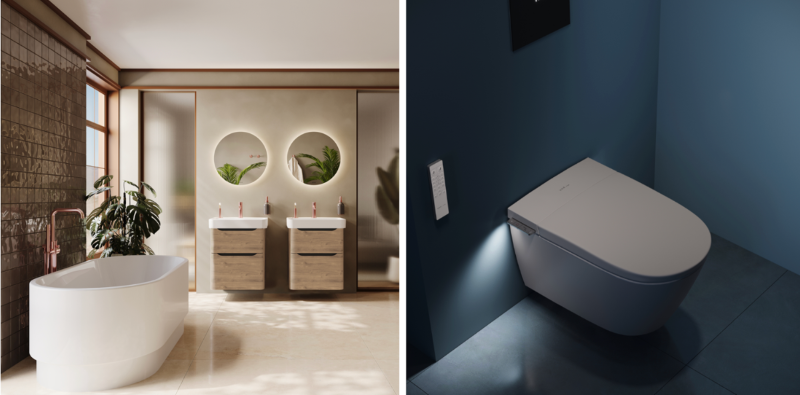
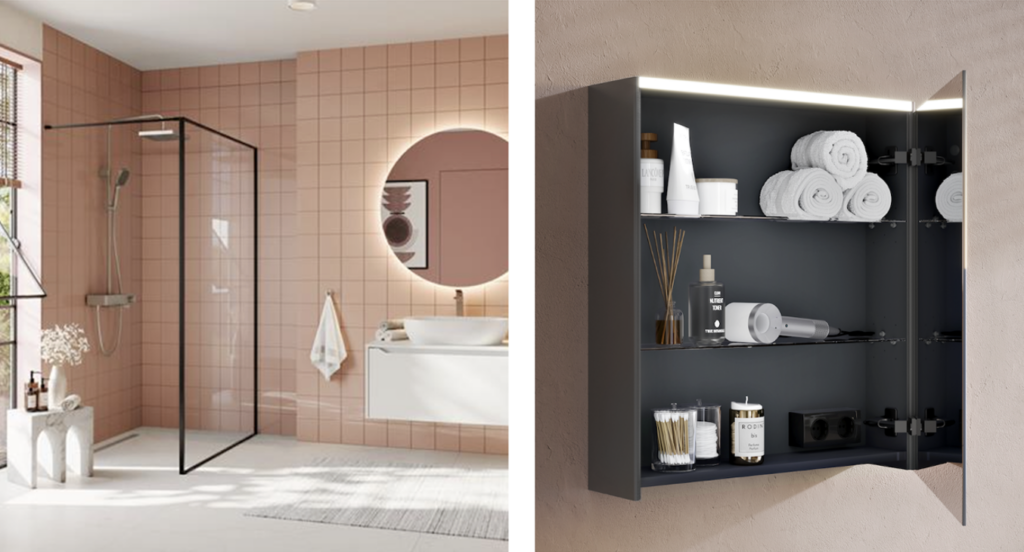
Sareta Round washbasin units in Maple Oak, £800 per two-drawer unit, shown with Minimax Round basin mixers in Brushed Bronze, £224 each; V-Care 3 smart toilet, prices start from £1,300 for the Base model
Spa-throoms and smarter room layouts
The rise of the ‘spa-throom’ reflects a growing desire to create a personal sanctuary at home, where a wellness-led approach supports relaxation and shapes everyday routines. Rather than relying solely on statement features, the emphasis is on how a space feels and functions, with thoughtful layouts contributing to a more restorative experience.
Wall-mounted furniture and handleless vanity units create uninterrupted lines while maximising the sense of space and providing storage for essentials. “Layouts are being designed around user experience as much as functionality, with larger shower areas and wall-hung or integrated storage solutions becoming non-negotiables. Vanity units act as a focal point for zoning, with double vanities remaining desirable where space allows. In compact bathrooms, zoning can be achieved through changes in materials, colour palettes or lighting for a greater sense of structure and flow,” says Nicola Friel.
Technology is also making daily rituals more intuitive and effortless, with features from motion-sensor lighting to smart toilets, offering a further layer of convenience and overall sense of wellbeing. By combining advanced personal hygiene technology with power-saving features and standby modes, the VitrA V-Care 3 smart toilet range takes a future-thinking approach to integrating sustainability into the modern bathroom.
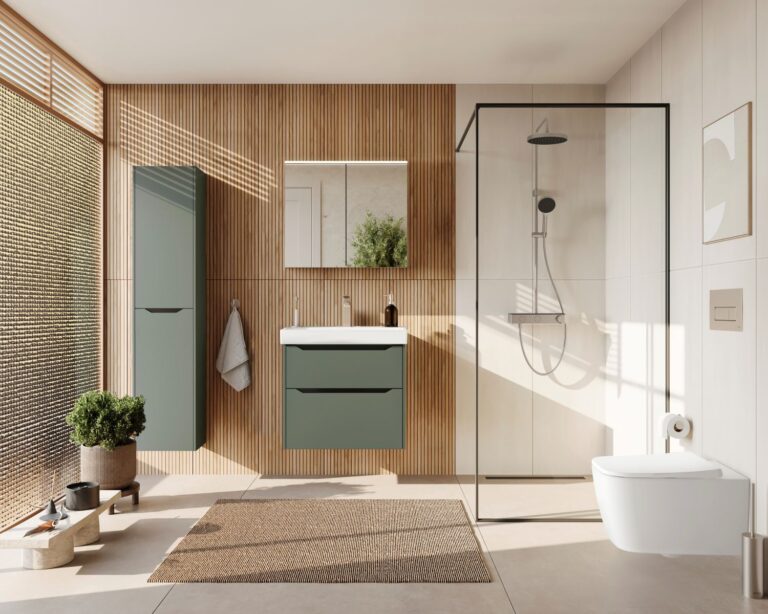
Plural square washbasin in Matt Moss Green by Terri Pecora, £623; Sareta tall unit, £820, and the two-drawer washbasin unit in Matt Green, £820; M-Line Edge two-drawer washbasin unit in Walnut, £1,401, and M-Line Edge tall units in Walnut, £1,334 each
Green and wood tones
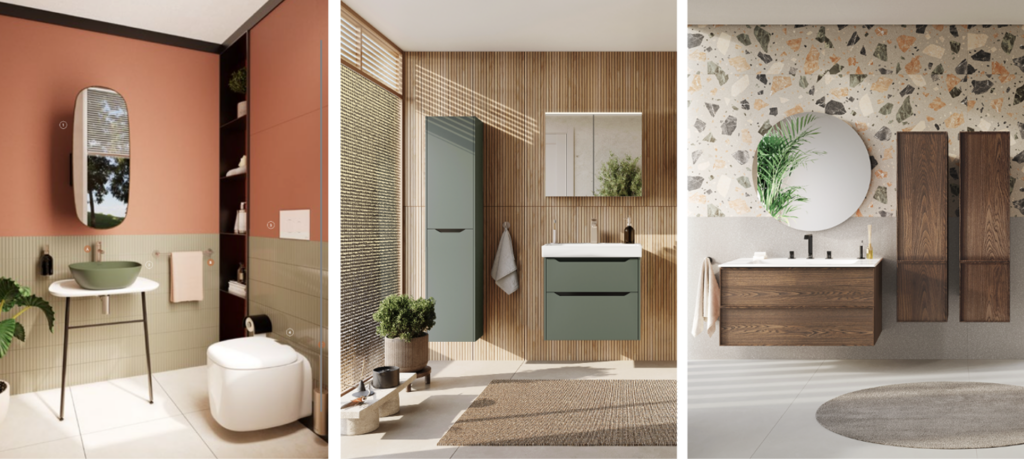
For 2027, the all-white bathroom is making way for a more nuanced, layered and lived-in aesthetic, as the boundaries between bathroom and living space continue to blur. Muted greens and warm wood finishes introduce depth and warmth, softening the clean lines of modern furniture and balancing the cool tones of white ceramics. Through its collaboration with designer Terri Pecora on the Plural collection, VitrA has explored the bathroom as a social living space of “shared intimacy”, with organic-shaped washbasins, warm wood finishes and natural colour palettes.
Design that creates micro-moments of interest
Bathroom design is increasingly shaped by small details that enhance everyday rituals. Integrated lighting, soft-close drawers and clever storage, along with showers that combine soothing rainfall with water-saving technology, demonstrate how comfort and conscious design can work together. “Considered details make a meaningful difference to how a bathroom looks, feels and functions. Space-saving solutions, such as shower niches and units with concealed depth are practical and create a streamlined and serene environment for homeowners to enjoy every day,” adds Nicola Friel.
Aquaheat Charm S 360 shower column with shelf, £907; Prime mirror cabinet with LED lighting and shaver socket, £1,068
RAK Ceramics has upgraded its Series 600 close-coupled WCs with enhanced specifications and greater comfort, and no increase in price.
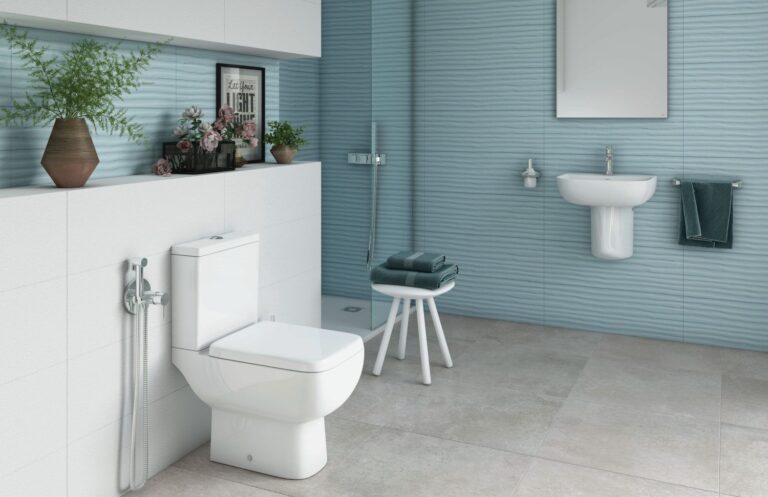
Effective immediately, the close-coupled WCs within the Series 600 collection are being upgraded to rimless technology, providing improved hygiene and easier cleaning while retaining the ranges distinctive contemporary design.
In a further major enhancement, Series 600 WCs will now feature a 425mm comfort height, increased from 400mm, offering additional comfort and accessibility.
The upgrades give retailers, merchants, specifiers, developers and installers an even stronger proposition, combining improved functionality with contemporary styling, all without adding to the cost.
The move to a 425mm WC height is a significant addition to the Series 600 range, offering the benefits of a higher seating position while maintaining its clean, square lines and versatile design.
The introduction of rimless technology also provides a more hygienic and easier-to-clean solution. By removing the traditional rim from the WC pan, the design helps reduce areas where dirt and bacteria can accumulate, while supporting efficient flushing performance.
Interim Managing Director, Ben Bryden, RAK Ceramics UK, comments:
“Series 600 is a well-established and popular ranges, and these latest enhancements are about giving our customers even more from it without asking them to pay more.
“Introducing rimless technology to the close-coupled WCs is an important upgrade, while moving from 400mm to a 425mm comfort height adds another significant benefit. It gives greater comfort and accessibility, alongside the range’s distinctive contemporary styling.
“For our trade partners, the message is very straightforward: more choice, an enhanced specification and greater value, all at the same price.”
The upgrades reflect RAK Ceramics’ continued focus on enhancing its sanitaryware portfolio through improvements in design, functionality and technology, while ensuring its products remain commercially relevant and competitively positioned.
The upgraded Series 600 close-coupled WCs are available with immediate effect.
Villeroy & Boch AG has confirmed it remains within its adjusted full-year forecast despite ongoing geopolitical tensions and the impact of divestments.
The group reported consolidated revenue of €956.2 million for the first 9 months of 2026, down 11.1% year on year. Excluding currency effects and the sale of the Northern European brands Gustavsberg and Vatette, revenue declined by 5.2%. Orders on hand increased to €167.4 million as at 30 September 2026, with €150.4 million at the end of December 2025.
Operating EBIT was €40.9 million, compared with €65.1 million in the previous year, or €55.5 million adjusted for divestments. The non-operating result improved to -€3.4 million, against -€24.5 million for the previous year. The Group recorded a result of -€12.4 million, compared with a profit of € 8.4 million in the previous year. Non-recurring tax effects contributed to the decline.
Bathroom & Wellness: Growing orders on hand in a challenging market environment
Villeroy & Boch’s Bathroom & Wellness Division reported revenue of €742.4 million for the first nine months of 2026, down 14.2 % year on year. Excluding currency effects and divestments, revenue declined by 7.2%.
The division continues to face pressure from geopolitical tensions and weak construction activity, with revenue falling by 13.5% in EMEA and 22% across APAC and the Americas.
Operating EBIT decreased to €28.2 million, compared with €52.5 million in the previous year. However, orders on hand increased to €136.9 million as of 30 September 2026, up from €131.9 million at the end of December 2025.
Georg Lörz, bathroom & wellness director, said the market remained challenging, particularly in regions affected by geopolitical tensions and subdued construction activity. He added that the increase in orders on hand reflected continued customer confidence in the division’s offering.
Lörz also highlighted the combined product ranges of Villeroy & Boch and Ideal Standard, alongside ongoing integration work, as key foundations for the division to benefit when market conditions improve.
Dining & Lifestyle: Revenue growth driven by e-commerce and new products
The Dining & Lifestyle Division increased revenue by +1.9% to €211.5 million, an increase of +1.9%. At constant currency, revenue growth was 2.4%.
E-commerce was a key channel, with revenue rising by13.3%, while stationary retail recorded a growth of 4.9%. Driven by orders for the new 2026 products and for the Christmas business, the order book rose significantly to €30.5 million (31 December 2025: €18.5 million).
“Dining & Lifestyle is growing even in an environment of subdued consumer sentiment. Our new products are being well received by retailers and consumers, and we are achieving double-digit growth in e-commerce. The significant increase in the order book means we remain confident about the Christmas business, which is so important for us,” comments Dr Peter Domma, dining & lifestyle director and chief digital officer.
Outlook for the 2026 financial year
Villeroy & Boch expects full-year revenue to decline by a high single-digit percentage, in line with its revised forecast, as geo poitical tensions and uncertainty over tariffs and trade policy continue to weigh on trading.
The Group’s outlook also includes operating EBIT of €50 million to €56 million, a rolling return on net operating assets of 5.5% to 6.5%, and operating investments of around €40 million.
The company said the global market environment remained challenging, with slow economic growth and the Middle East conflict adding to uncertainty.
“In view of the economic and geopolitical environment, we’re continuing to plan prudently. However, with the forecast confirmed at the end of the quarter, an increased order book and solid performance in Dining & Lifestyle, we have a good foundation for the final quarter,” says finance director Dr Markus Warncke.
Paris-based design brand Trone is bringing a distinctive design perspective to the UK luxury bathroom market through its retail partnership with West One Bathrooms. Established in May 2026, the partnership made West One Bathrooms the first, and currently the only, UK bathroom retailer to stock the brand, introducing a collection that challenges conventional approaches to sanitaryware and bathroom interiors.
Founded with a mission to rethink 250 years of bathroom design conventions, Trone transforms everyday bathroom essentials into sculptural design statements. Combining bold geometry, fluid forms and considered engineering, its collections offer an alternative to conventional bathroom fittings, with pieces designed to bring individuality and character to contemporary interiors.
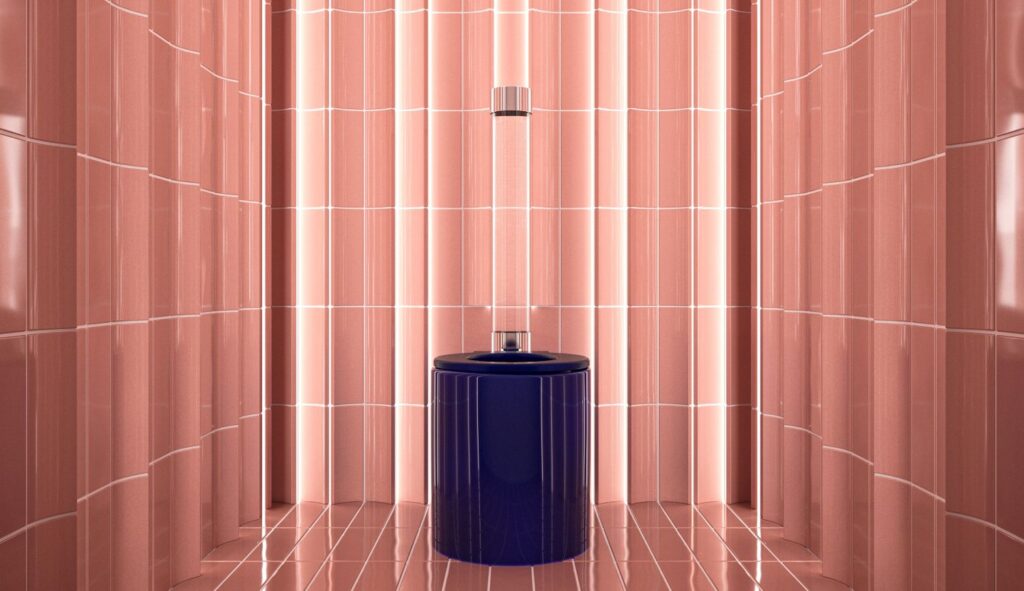
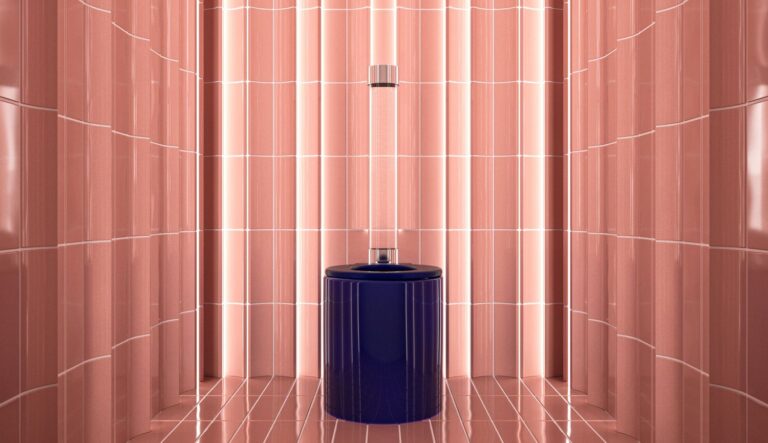
The collection spans toilets, basins, mixers and accessories, drawing inspiration from natural forms, radical geometry and the movement of water. Signature designs include the Icone toilet, distinguished by its translucent water column, and the Rituel basin, whose fluid contours echo the natural erosive effects of water. Each piece balances visual impact with functionality, positioning sanitaryware as an integral part of the wider interior design scheme.
Designed in Trone’s Paris studio and crafted by specialist ceramic artisans across France, Italy and Portugal, the collections reflect a commitment to European craftsmanship, material quality and longevity. Innovation and sustainability are also central to the brand’s philosophy, with an emphasis on creating distinctive pieces intended to stand the test of time.
“We are always looking for brands that challenge the norm and push bathroom design in a genuinely new direction,” says Duncan Waters, managing director at West One Bathrooms. “Trone does exactly that. There is nothing quite like it in the UK market, and we’re proud to be the first to bring it here. For our clients, whether homeowners, architects, or interior designers, this is an opportunity to access a truly special collection that elevates the bathroom to something memorable.”
Hugo Volpei, Founder and CEO of Trone, adds: “At Trone, we’ve always set out to challenge conventions and rethink everyday bathroom elements, bringing together design, engineering, and European craftsmanship to create something truly refined. Our collaboration with West One Bathrooms as our first UK retail partner is an important step for us, as they share our commitment to innovation and to pushing the boundaries of bathroom design. Together, we are proud to introduce a new perspective to the UK market, where bathroom pieces are elevated into objects that are characterful and distinctive.”
Since launching at West One Bathrooms’ Clerkenwell showroom during Clerkenwell Design Week in May 2026, the Trone collection has formed part of the retailer’s offering for clients seeking distinctive, design-led bathroom solutions. A wider rollout across West One Bathrooms’ UK showroom network was planned as part of the partnership.
There’s a growing appreciation for bathroom fittings that have a distinct character of their own. For a long time, the emphasis was on very simple, almost anonymous designs, butincreasingly, homeowners and interior designers are looking for something more individual. Luxury is about the quality of the materials, the craftsmanship behind a product and choosing pieces that will be treasuredfor years to come.
The Marlborough basin from British bathroom manufacturer Thomas Crapper reflects this growing appreciation for craftsmanship and timeless design. Created by hand from vitreous china, the basin is distinguished by its gently sculpted profile and integral splashback.
It can be paired with Thomas Crapper’s decorative washstand, available in chrome, nickel, polished or brushed brass, which introduces an additional architectural detail while providing a practical supporting structure. At 560mm wide, the basin is equally suited to generously proportioned bathrooms and smaller cloakrooms, bringing character to both traditional and more contemporary settings.
As Paul Dwyer, managing director, Thomas Crapper & Co., says, “Provenance is becoming an important part of the design conversation. People want to understand where their products come from, how they’re made and what makes them special. It’s encouraging to see traditional manufacturing skills and beautifully considered details being valued again.
“One of the things I find particularly interesting is how well classic bathroom fittings work across different styles of interior. A beautifully made basin can sit against richly patterned wallpaper, decorative tiles or simple painted panelling, and feel completely at home in each setting. That versatility is important because it gives designers the freedom to create something genuinely personal.”