

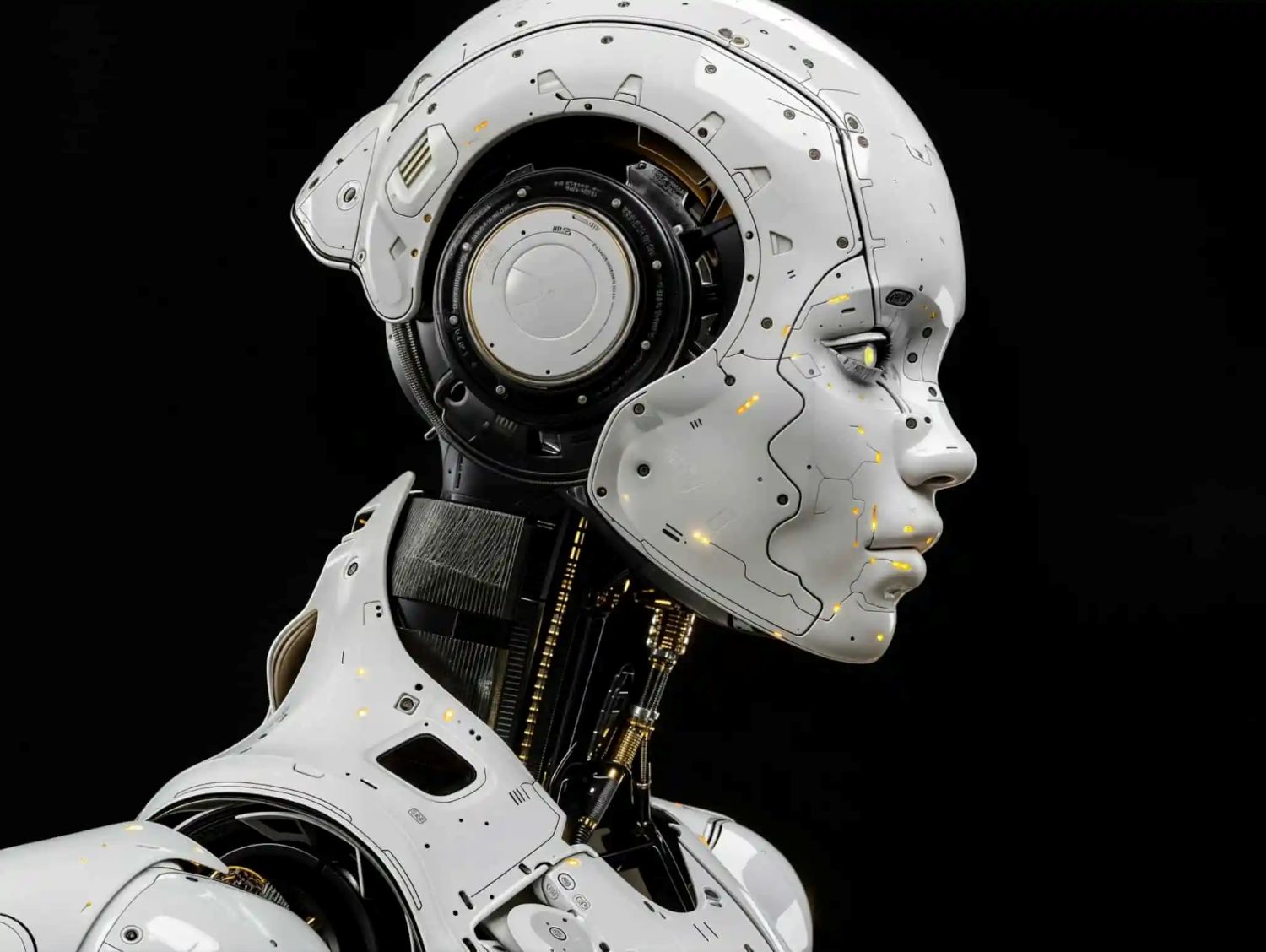
THE jobs most at risk from AI are those in customer service, data entry, banking and paralegals, experts have revealed. Safeground includes careers that are resilient to AI, such as building trades, healthcare roles, and hands-on occupations.
Just last month, the government announced free AI foundations training for all workers has been expanded to up-skill 10 million people, with new partners including NHS and techUK.
But for many, they fear AI will mean their job will be automated in a matter of years – leaving them jobless.
Newspage spoke to experts in AI and small business owners about the jobs they fear will become largely defunct due to AI and what people in those industries need to do about it.
Colette Mason, Author & AI Consultant at London-based Clever Clogs AI, shared the jobs she believed were at risk from AI. “AI isn’t coming for your job. For millions, it’s already there. Customer service: 80% automation potential. Data entry: 7.5 million roles gone by 2027. Banking: 200,000 Wall Street jobs at risk within five years. Paralegals: 80% risk by 2026. Microsoft writes 30% of its code with AI, then lays off 40% of its engineers. Retraining doesn’t mean learning to chat with ChatGPT.
“It means understanding systems and security and risk, where AI breaks, where human judgement is non-negotiable, and staying on the deciding side. Timeframes? Massachusetts Institute of Technology (MIT) says 11.7% of US jobs are automatable now, not future AI, today’s. VCs call 2026 the year budgets shift from headcount to compute.
“Safe ground? Trades, healthcare, anything needing physical presence and real human relationship. In 2025, 40% of graduates chose plumbing, electrical, and construction over white-collar degrees. They read the room before most boardrooms did.”
Rohit Parmar-Mistry, Founder at Burton-on-Trent-based Pattrn Data, said jobs are being lost by firms replacing junior staff with AI. He continued: “Let’s stop pretending AI is about to wipe out entire professions. The so-called ‘jobs apocalypse’ is largely a boardroom fantasy, heavily pushed by big corporates obsessed with short-term cost-cutting rather than actual innovation. In our AI Audits, we constantly see firms trying to replace junior staff with generative AI to save a few quid. The result?
“Quality plummets and they end up with a costly mess because they removed the human reasoning that makes businesses function. Automation theatre always fails when it meets real human complexity. If you want to ‘AI-immunise’ yourself, stop viewing it as a competitor.
“Learn how to use these tools to automate the dull parts of your day, freeing you up for the complex, creative, and relationship-driven work that algorithms can’t touch. The real threat isn’t AI taking your job, it’s someone who knows how to use AI taking your job. Technology should serve people, not the other way around.”
Patricia McGirr, Founder at Burnley-based Repossession Rescue Network, agreed that junior roles are being lost. She added: “AI will not steal your job. It will expose how replaceable it is. The most at risk roles are built on repetition. Data entry. Basic accounts prep. Templated legal drafting. First line underwriting. Scripted customer service. If your day runs on a checklist, a machine can run it faster.
“The real danger is not robots everywhere. It is shrinking career ladders. Fewer junior roles. Higher output targets. Wage pressure within three to five years. Anyone entering those sectors needs to pivot now. Learn AI tools quickly, yes. But build the layer above them.
“Judgement. Context. Commercial awareness. Regulatory responsibility. Client trust. AI can process rules. It cannot sit across the table from a worried client and carry the consequence of advice given. Average is automated. Accountable is not. That is the dividing line.”
Kate Allen, Owner at Kingsbridge-based Finest Stays, advised business owners to work with AI. She continued: “Process-driven, pattern-based professions are perilously poised for AI takeover. Payroll processing, paralegal paperwork, basic bookkeeping, routine reporting, call-centre queries and junior programming all sit squarely in the firing line. If a role runs on rules, repetition and rigid workflows, it is vulnerable.
“Careers rooted in empathy, interpretation and imagination such as therapy, teaching, leadership, negotiation, nuanced journalism and skilled trades remain resilient because the human touch still triumphs where context and care count.
“My advice is simple: pivot and prepare, pair your profession with AI fluency, learn to prompt and supervise systems, and prioritise creativity, critical thinking and complex communication. Automation will accelerate over the next five to ten years, so adapt early, add value and stay strategically human.”
Dr Marianne Trent, Clinical Psychologist at Coventry-based Good Thinking Psychology, said the human connection is still important. She added: “With people regularly turning to ChatGPT for mental health advice you might think psychologists might be at risk. However, speaking as a clinical psychologist I feel that ultimately people will notice that human connection is so important and protective for mental health.
“I’d wager that your therapist is infinitely less annoying and used way less em-dashes than a chat with a bot too.”
Photo Credit: gabriele-malaspina-